Being Against a Good Thing?
Dysmemics - The dangers of mis-memeing a good meme.

I’ve been reading Paul Bloom’s (2016) “Against Empathy” - obviously prompted to do so by the recent media traction of Elon Musk’s claims that empathy is somehow humanity’s biggest problem.
And a recurring issue for my agenda is #Dysmemics or “the memetic problem”, that the snappy statement of an attention-grabbing idea has cultural traction way beyond, even counter to, the quality or the content of the original idea. ‘Twas ever thus. But, in our days of ubiquitous speed-of-light media, where the media-owner and algorithm-controller with a personal following of a quarter of a billion acolytes, shares such an opinion it’s not just a problem it’s an existential disaster for all of us. In fact addressing that dysmemic disaster is pretty much the core of my systems thinking agenda across science & the humanities, politics, economics & governance, … our collective decision-making generally. In my terms "Humanity’s biggest problem is #Dysmemics” and the solution requires Systems Thinking being #MoreThanScience
As with “In praise of … X” (I come to bury Caesar?) etc, being “Against X” is a well established rhetorical meme. Socratic and indeed associated with any number of classical sources, it became a self-referential meme when Susan Sontag’s (1964 essay / 1966 book) “Against Interpretation” inspired Paul Feyerabend’s (1967) title “Against Method”. In my own reading and research experience Iain McGilchrist’s (1982) “Against Criticism” is the next in that meme-line, a long heritage it turns out, when I asked ChatGPT to collate the summary (below) of all potential instances of the meme. Interesting and of future value in its own right.
I’d been curious about the history of that meme since before Musk’s interjection, but I was already writing these thoughts on reading Bloom’s contribution:
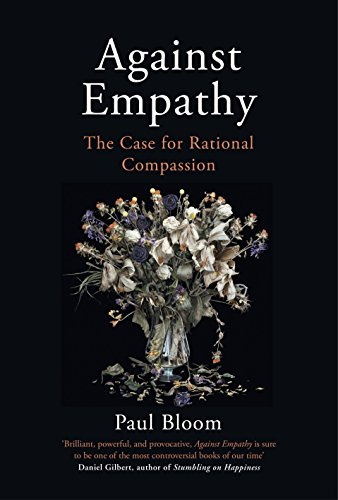
Bloom’s position, as with all the examples I knew of, is only against the good thing in the sense that he wants to draw attention to multiple aspects of that thing - empathy - including its downsides and the pitfalls of focussing on just one aspect of a complex thing. Pitfalls that lead to poorer or limited understanding generally and, as Musk inadvertently demonstrates, can be exploited by ill-informed bad-faith actors. The memetic aspect is in the simple catchy title, which has the attention-grabbing feature of being “shock horror” against the orthodoxy of the expert’s subject - eliciting the “surely not … ?” reaction. Outrage, not sanity, sells clicks.
Given the form of the title - the recognisable meme - notwithstanding any subtitle in “The Case for …” a different aspect - any experienced reader knows what to expect in outline if not in detail. The specific detail in Bloom is to draw a distinction between Emotional Empathy and Cognitive Empathy.
The natural emotional, embodied, gut-feel sense of experiencing another person’s problem or pain from the perspective of “being in their shoes” has good evolutionary reasons in drawing individual attention to a problem that might affect any of us in different circumstances and helping them find a solution might benefit more of us. The point of the emotional / cognitive distinction is that whilst the emotional aspect raises the issue in individual consciousness, that emotional incentive “to do something” is not itself enough “to decide which thing” is the best course of action now or in the future, for them or for us more generally. The sense of feeling good from “doing something” is not itself a good indicator - indeed may be a misleading bias - that the something is “doing good”. That requires cognitive attention to the problem and possible courses of action. There may be urgent need to to act reflexively so the immediate cognitive load may be limited to caution in checking the options immediately … available, am I really helping if I do this?
That is surely non-contentious, the need to think about actions and consequences, benefits and risks, now and in the future.
Beyond that basic point, there is much in Against Empathy in terms of example problematic situations to illustrate the interplay between the emotional and cognitive aspects, and lots on the science & psychology of social reasoning as well as objective rationality. Despite his subtitled case “for Rational Compassion” Bloom doesn’t go as far as Peter Singer’s Effective Altruism in demanding purely objective - narrowly rational - reasoning.
Clearly also mentioned, but not elaborated so far as I can see in great detail, is the us & them aspect of who “we” are and how tribal biases between In-Groups and Out-Groups can distort even the initial emotional responses, though they too have good evolved reasons to exist.
Lots more in my own agenda on what makes for good, individual & collective, decision-making-reasoning being #MoreThanScience #MoreThanObjectiveRationality - a dynamic integration of “East<>West” thinking which it’s not appropriate to expand on here - though Bloom does indeed share many of my own philosophical and scientific sources.
So back to Musk. The point to conclude here is that his simplistic take cannot convey any of the necessary subtlety behind Bloom’s memetic title. Musk’s actual words, subsequently paraphrased even more simply by himself and others on social media - the very essence of #Dysmemics - were spoken on a Feb 2025 edition of The Joe Rogan Experience (transcribed here):
“The fundamental weakness of Western civilization is empathy. The empathy exploit. They’re exploiting a bug in Western civilization, which is the empathy response.”
He’s actually channelling the work of Gad Saad which is pointing out that excessive emotional empathy is exploitable by bad actors, suicidal empathy if unchecked. Clearly he / both had in mind a bad actor in “they’re exploiting”. But it’s not empathy that’s the problem, its too much of the one kind. What Musk’s autistic self-confidence in objectivity fails to appreciate, is that he is #PartOfTheProblem when propagating simplistic versions of more subtly important messages.
The original meme of “Being Against” something otherwise good is fine where clearly understood, and the meme itself is not complicated to understand. But reducing the complex specifics of being against empathy to sound-bites of empathy itself being our biggest problem is a meme too far.
=====
The “Against X” Meme - (with the help of ChatGPT)
Principal Works / Books
1964/66 Susan Sontag Against Interpretation
1975 Paul Feyerabend Against Method
1982 Iain McGilchrist Against Criticism
1982 Theodor W. Adorno Against Epistemology: A Metacritique
1993 John D. Caputo Against Ethics: Contributions to a Poetics of Obligation with Constant Reference to Deconstruction
1996 Steven Vogel Against Nature: The Concept of Nature in Critical Theory
2002 Matt Cavanagh Against Equality of Opportunity
2003 Laura Kipnis Against Love: A Polemic
2008 Eric G. Wilson Against Happiness: In Praise of Melancholy
2010/14 Ryan Conrad, ed. Against Equality (series, below)
2012 Harvey Molotch Against Security: How We Go Wrong at Airports, Subways and Other Sites of Ambiguous Danger
2013/14 Bruce Fink Against Understanding, Volumes 1 and 2
2013 Stephen T. Asma Against Fairness
2016 Paul Bloom Against Empathy: The Case for Rational Compassion
2016 Jason Brennan Against Democracy
2016 David V-Reybrouck Against Elections: The Case for Democracy
2016 Alexis Shotwell Against Purity: Living Ethically in Compromised Times
2018 D Raventós & J Wark Against Charity
2018 Oli Mould Against Creativity
2019 Lorraine Daston Against Nature
2023 Owen Flanagan et al. Against Happiness
2024 Simon Feldman Against Authenticity: Why You Shouldn’t Be Yourself
2024 Slavoj Žižek Against Progress
Essays & Shorter Works
1951 Witold Gombrowicz Against Poets
1964 Susan Sontag Against Interpretation (originally the essay before the 1966 collection)
1982 Steven Knapp Against Theory
& Walter Michaels
2003 John Taylor Gatto Against School
2004 Galen Strawson Against Narrativity
2009 Lawrence Lessig Against Transparency
2010 Mark Greif Against Exercise
The Against Equality sequence
2010 Ryan Conrad (ed) Against Equality: Queer Critiques of Gay Marriage
2011 Ryan Conrad (ed) Against Equality: Don’t Ask to Fight Their Wars
2012 Ryan Conrad (ed) Against Equality: Prisons Will Not Protect You
2014 Ryan Conrad (ed) Against Equality: Queer Revolution, Not Mere Inclusion
Significant Literary Precursor
1884 J.-K. Huysmans, À Rebours - translated variously as Against the Grain and/or Against Nature.
(It anticipates the provocative stance, although it is a novel and the English title is a translation rather than part of the direct Sontag–Feyerabend lineage.)
The Clearest “Canonical” Sequence for the Meme
Sontag, Against Interpretation >>> Feyerabend, Against Method >>> McGilchrist, Against Criticism >>> Fink, Against Understanding >>> Bloom, Against Empathy.
(Those are especially pure examples because each title apparently rejects a fundamental virtue of the author’s own field.)
=====
I’m reminded of the story of the laconic Calvin Coolidge. So it goes, he was returning from church and was asked about what had gone on:
“Calvin, what was the preacher’s sermon about?”
“Sin.”
“What did he say?”
“He was agin’ it.”
Sadly, the only one of the works you mention with which I’m familiar is Feyerabend’s Against Method, which tries, deliberately and repeatedly, to be shocking. Sadly, he was far too intelligent to maintain his ‘anything goes’ claim with any consistence. The more accurate ‘Against Universal, Context-Free Scientific Method’ does not have the same snappy, épater le bourgeois mimetic flavour.