
With my current priorities I’m probably not going to have the bandwidth to fully read and review Mark Carney’s “Values - An economists guide to everything that matters.” (Hat tip to Steve for reminding me I had a copy.)
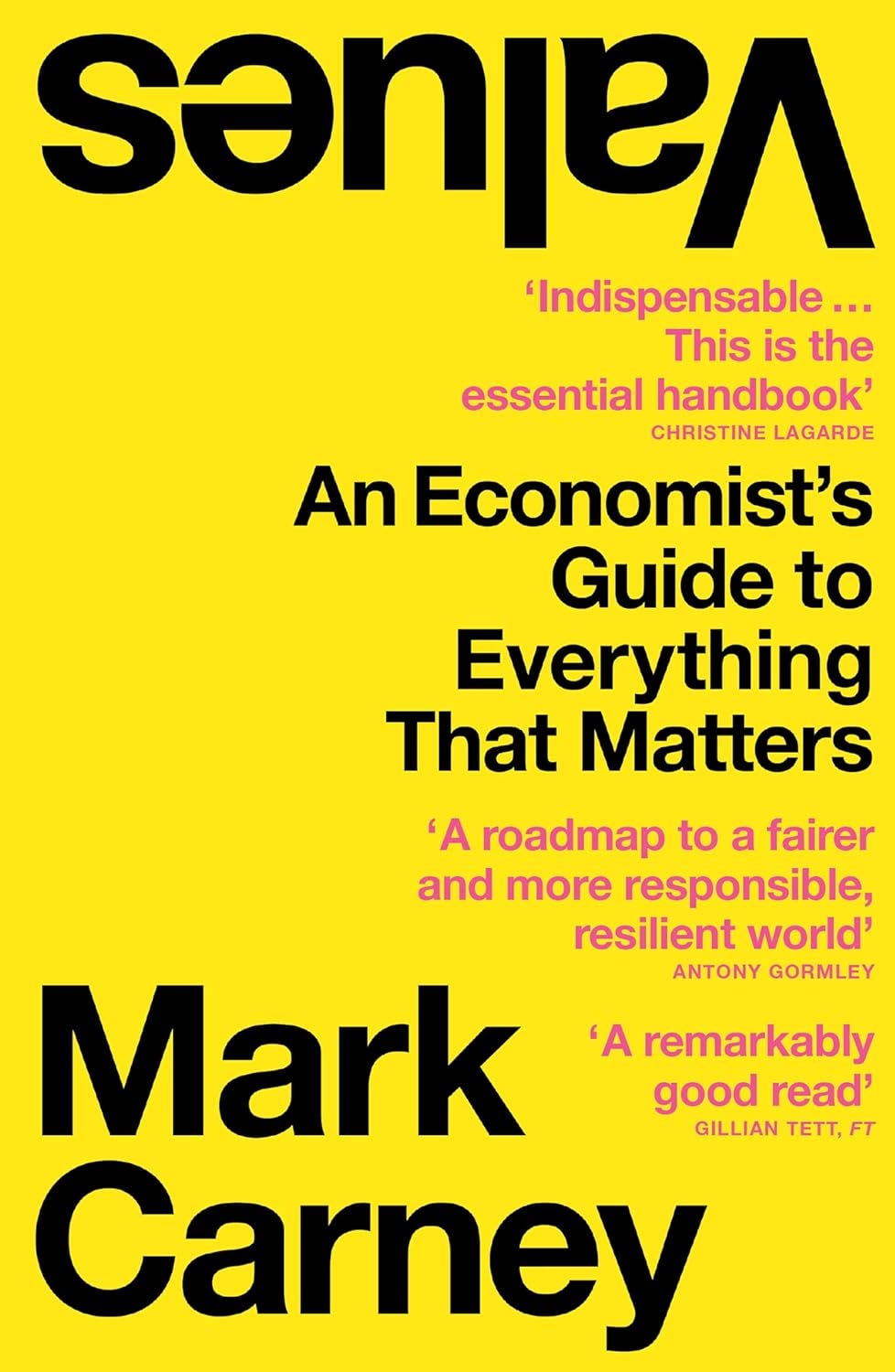
I’d forgotten it was (mostly) written before and first published during Covid, and in this 2022 Paperback edition he presents a new preface explaining that context. It does have a table of contents with chapter titles, and end-notes, but not a detailed alphabetic index of contents and names, so my incomplete read (for now) is only going to focus on the messages that are telegraphed early, and his explicit (humble) aims and conclusions.
The choice of title and subtitle say a lot. Like Adam Smith, the economist most famous for his (1776) “Wealth of Nations” who’s nevertheless more important earlier work was (1759) “A Theory of Moral Sentiments”, simply choosing the words “Value” and “Matter(ing)” means we are already shifting the emphasis away from the bald arithmetic of accounting, to what really matters to humanity, what mattering really means.
My post title and sub-title above are themselves the title of his preface and an early quote from it. In our technology mediated world, the emphasis again is human values, not the arithmetic of popularity and clicks. And very early in that preface he’s pointing out that how we decide collectively - as free individual voters and customers - what is for the best for all in terms of externalities, beyond our immediate personal choices and transactions, is confounded by “The Tragedy of the Commons”. Market regulation at nation state and international levels is an inescapable protection of such values beyond arithmetic. The irony, or downright paradox, that elected politicians are often reminded to focus on the numbers - democracy works best with as few elections as possible.
Despite his obvious focus on values, and an early chapter on “Perspectives of Subjective Value”, he really majors on “Net-Zero” one very simplistic arithmetic measure if ever there was one. He claims it’s not just a slogan, and yet it’s a concern for me that he uses that term as a slogan for what matters about climate change a dozen times, just in his preface.
His introduction is “Humanity Distilled” and his goal “Restoring Humanity in a Society that Values what Matters”. From his time as governor of the Bank of England, a G7 / G20 Governor, he reminds us that the apparent solidity of the building and the gold in its vaults is not where value lies, never really was. And obviously, the contrast in “the price of everything and the value of nothing” is voiced in multiple forms. But in fact he leads with a challenge from Pope Francis speaking at a meeting of the great and the good hosted by the Vatican, being the main inspiration for the book:
“Our meal will be accompanied by wine. Now wine is many things. It has bouquet, colour and richness of taste that all complement the food. It has alcohol that can enliven the mind. Wine enriches all our senses. At the end of our feast, we will have grappa. Grappa is one thing: alcohol. Grappa is wine distilled.
Humanity is many things: passionate, curious, rational, altruistic, creative, self-interested. But the market is one thing: self-interested. The market is humanity distilled.
Your job is turn the grappa back into wine, to turn the market back into humanity. This isn’t theology. This is reality, This is the truth.”
And sure enough, he sees that challenge as rebuilding “rules based international order” with “an inclusive social contract that recognises values and beliefs” where, as his first explicit reference (Adam Smith 1759), has long stressed that values and beliefs are part of “inherited social capital”.
What’s not to like?
So, how does he propose we do it?
Like so many people collaborating cooperatively and internationally his “how?” is based around the way things work. Commuting from the bedroom via breakfast and hydration to the video-call-equipped home-office. Clocking the “Billy” bookshelves in the background (just like mine).
And yes - meditation - as part of that short commute, and re-reading Marcus Aurelius’ meditations - “trust me, it creates time”.
His concluding recommendations are very personal and anecdotal. This is how “I” pursue and practice virtue, with an immortal time horizon beyond our individual mortality. You should too. We all should.
He doesn’t make the explicit comparison, but virtue is like love. Virtue, he does suggest, is not a consumable resource. The more you use it the more you create, in others in the wider world.
“Arise for the work of humankind. Be humble. However grand you are today or may become tomorrow, you too will be forgotten […] But our moral sentiments can live on as memes that multiply through values in the service of others. A worthy past sedimented into a better future.
That’s how we turn grappa back into wine.”
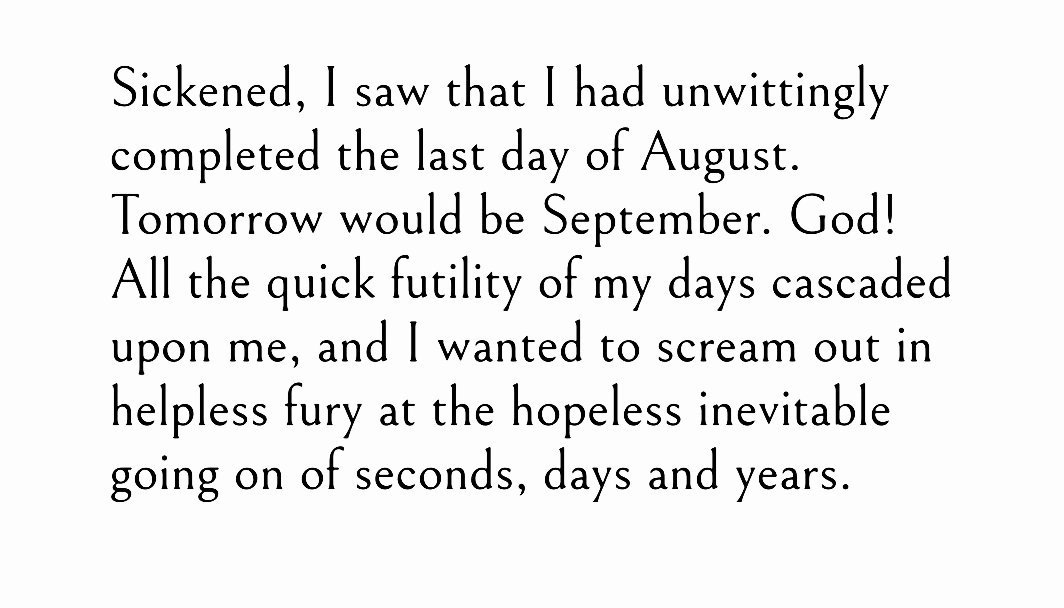
Wow! Both not what I was expecting and yet exactly what I could hope for. He even uses the idea of memes as correctly intended. The real remaining “how?” for me is the sell. Selling such an enlightened subjective thinking meme into a world already dominated by the technical and objective memeplex, and the dysmemics of electronic media attention deficit. Snappy simplistic messages drive out nuanced enlightenment every day, every hour, every second. As Sylvia Plath put it:
We need that human space and time created by meditation, standing back from the immediate.
I will have to revisit and properly read his more specific proposals of Part III under “Values-Based Leadership”, “How Purposeful Companies Create Value”, “Investing for Value(s)” and “How Countries Can Build Value for All”
That last heading, is pretty central to my own efforts right now. How individual states and supra-national institutions can even repair their recent fragmentation, restore the sense of rules-based international order around free-democratic nation states, before we can even focus on such a virtuous shared aim.
=====
Post Notes:
(Gonna have to get a Kindle copy too, so I can search topics and names.)
And hat-tip to Dennis Findlayson, in today’s Grauniad, a review of Gordon Brown’s latest on “Beating Populism”:
… preoccupied less with economics [and its technicalities] than with the argument that collapsing civic ties – the fact that we’re less likely now than a generation ago to be part of a club, trade union, church or community group – have helped undermine the very idea that we are all in this together, that there are common causes worth fighting for [and values worth maintaining]. Beating populism, [etc, etc, - the very essence of dysmemics].
I mentioned in my review of Arundhati Roy’s memoir, which I really shouldn’t have been reading, that I also had Carney’s book (above) and Paul Mason’s “Reds - a Global History of Communism”. Well blow me down, I’ve actually started reading that too. His “Instead of an Introduction (Not even the dead are safe)” is captivating.
Why he’s written it as a narrative of events selected because of their of their consequential import, not an encyclopaedia of everything that happened organised by themes, but “chronology is your friend”. (The same reason as a blogger I’ve organised key interests as a “timeline”.)
And the $64,000 question, who cares, why do we need a history now? Well, once we get past Trump, Putin and Ukraine, we’re going to want to understand where we might be going with China.
=====